한뉴픽
2024.12.3. Emergency martial : Repeated history, democracy again

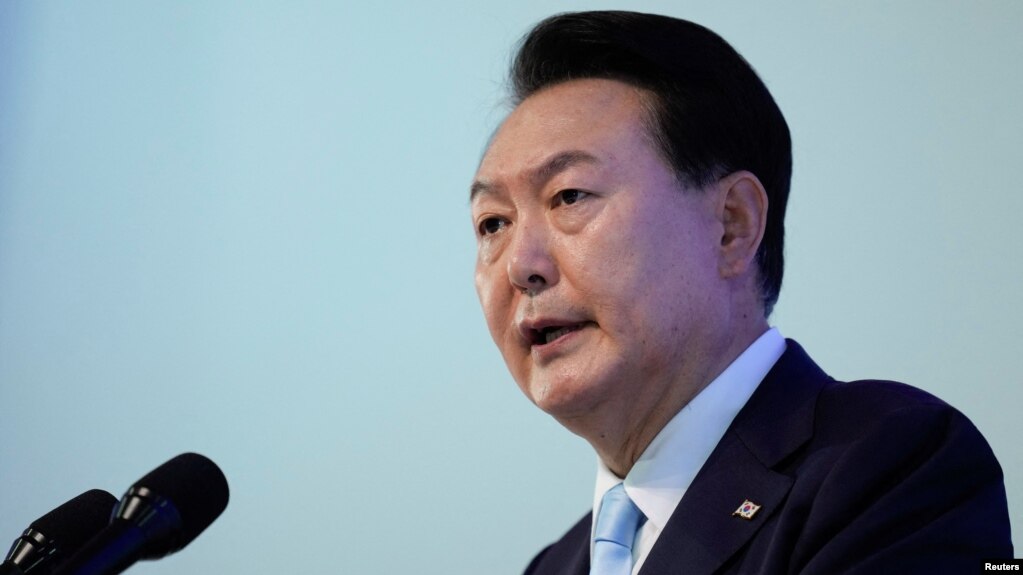
On December 3, 2024, at approximately 10 PM, Yoon Suk-yeol, the 20th President of South Korea, announced a nationwide state of emergency during an urgent briefing. He explained that this action was necessary to eliminate pro-North Korea and anti-state elements and to safeguard the free Republic of Korea. Concurrently, he set up a martial law command and deployed martial law troops. In his initial announcement, he implemented control measures that included a total ban on political activities by the National Assembly and political parties, regulation of all media and publications, and the potential for warrantless arrests, detentions, and searches under martial law. Following this, martial law troops and police attempted to take control of the National Assembly, which had the power to vote on the repeal of martial law, effectively executing a coup. Tensions escalated as the martial law troops and police blocked National Assembly members from accessing the main assembly hall.
On December 4th, around 1 AM, the National Assembly unanimously approved a resolution to lift the martial law, despite military interference. Later, at a cabinet meeting at 4:30 PM, Yoon officially ended the martial law, completing the process within six hours. This martial law, the first in 45 years since 1979, sparked public outrage and concern. Citizens nationwide took to the streets once more, lighting candles to call for his arrest, detention, and impeachment. On that same day, six opposition parties, excluding the People Power Party, filed an impeachment motion against the president. The initial vote was deemed invalid due to insufficient attendance (200 members). However, on December 12th, lawmakers from both the ruling and opposition parties introduced a second impeachment motion, which was ultimately approved.
The following events were brought before the Constitutional Court, where investigations and trials took place regarding accusations of treason and breaches of the constitution and laws. In the meantime, frustrated crowds took to the streets, demanding the president's impeachment. They denounced the state of emergency as an act of treason and called for the removal of traitors to restore democracy. Numerous protests erupted nationwide, including some counter-rallies against the impeachment led by far-right leaders. These individuals argued that most media outlets either ignored the anti-impeachment protests or minimized their significance, showing bias towards the pro-impeachment faction. They defended the state of emergency, echoing Yoon's assertion that "the state of emergency was executed within constitutional bounds and is not treason." The streets were filled with people expressing diverse opinions, leading to conflicts and clashes.
Yoon's declaration of a state of emergency is clearly constitution. His supporters argue against its unconstitutionality by pointing out that martial law was not fully implemented. He tried to take control of the National Assembly by deploying armed forces. The announcement made with the state of emergency clearly forbids political activities within the National Assembly and prohibits misinformation, manipulation of opinions, and false propaganda, asserting that all media and publications are subject to the martial law command. Major media organizations have condemned the proclamation, labeling it as an attempt to undermine the fundamental principles of liberal democracy that the constitution protects. Freedom of the press and expression are essential rights that our society has fought hard to secure, and they are constitutional values that cannot be arbitrarily violated by any authority. Thus, any effort to regulate this freedom of the press constitutes a constitutional violation that endangers democracy.
In 2017, President Park Geun-hye was impeached due to allegations connected to the National Assembly scandal. The military coup on December 12, 1979, faced opposition from the May 18 Democratic Movement. The Republic of Korea is a democratic nation that holds accountable those who threaten democracy and the constitutional order. As history tells us, Yoon is no exception. On April 4, 2025, at 11:22 AM, the Constitutional Court reached a unanimous decision among all eight justices: "Yoon has violated the trust of the populace by declaring a state of emergency, an action that is unacceptable in terms of upholding the Constitution. The advantages of maintaining the Constitution through his removal outweigh the potential national losses. Therefore, we issue this order with the unanimous agreement of all justices. Order: The respondent, President Yoon Seok-yeol, is hereby removed from office."
"In front of democracy, the press is free. Thus, we experience democracy alongside a free press. Yoon Seok-yeol's declaration of a state of emergency was impulsive behavior of a dictator, and the public will remember all those who collaborated with the rebellion." Many citizens lit candles in support of democracy. The Hannam Media Center also took up the pen, refusing to stay silent. Taking a stand in their own ways, as they have always done, and reclaiming what they sought. Thanks to citizens who resist the cycles of history, democracy in South Korea is still thriving. The dictator has retreated, and amidst the turmoil, the people are flowering democracy again.
Hwang Ho Rim/Reporter
정보관리부서 : 홍보팀
최종 수정일 : 2026-04-06