한뉴픽
The Story of the Last Name in Korea and Vietnam

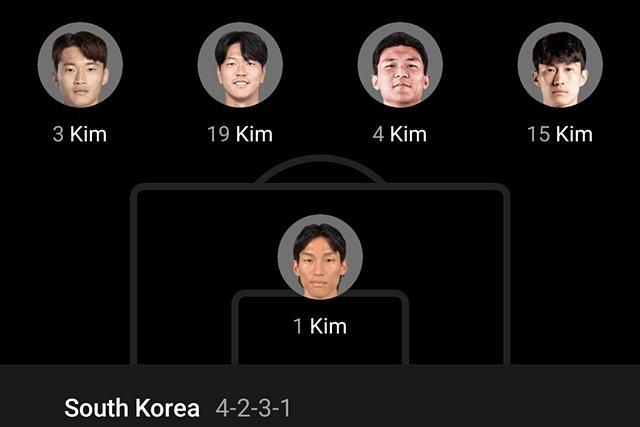
In the 2022, Qatar World Cup match between South Korea and Uruguay, five out of the eleven starting players for Korea shared the surname "Kim." Alongside goalkeeper Kim Seung-gyu, defenders Kim Jin-su, Kim Young-gwon, Kim Min-jae, and Kim Moon-hwan all appeared simultaneously in the lineup. This led the American sports media outlet, Yahoo Sports to humorously remark, “Korea doesn’t just need one Kim.” While foreign commentators found it difficult to distinguish players from others, Koreans easily identified each player by their full names, faces, and positions.
This episode offers a glimpse into Korea’s unique surname culture. South Korea is a society where a relatively small number of surnames are shared by many people; just three surnames — Kim, Lee, and Park — account for over half of the entire population. However, Koreans can distinguish between people with the same surname by referencing their bon-gwan, ancestral origin. For example, “Gimhae Kim,” “Gyeongju Kim,” and “Gwangsan Kim” are all Kims but belong to completely different clans. This distinction is not just for identification but serves as a cultural standard to differentiate lineage, ancestry, and identity.
The Korean surname culture is deeply rooted in history. Over the course of the Goryeo and Joseon dynasties, surnames gradually spread to commoners, while the ruling class meticulously organized clan origins and genealogies to maintain their authority. Influenced by Confucian values, Korean society developed a strong culture of ancestor veneration and family lineage, giving surnames a meaning far beyond personal identification. Surnames also influenced marriage and social relations. There was a custom which prohibited marriage between people sharing the same bon-gwan. In some periods, even legal restrictions existed to prevent such unions. These measures aimed to avoid consanguineous marriages but also demonstrated that surnames functioned as tools for social distinction and order. To this day, people with the same surname and bon-gwan may still feel a sense of kinship or solidarity, and these ties can influence social networks in local communities or workplaces.
In contrast to Korea’s surname culture, neighboring Vietnam presents somewhat different pattern despite sharing East Asian cultural roots. Approximately 40% of the Vietnamese population carries the surname “Nguyễn.” This is an extraordinarily high proportion, and such concentration of a single surname within one country is rare worldwide. The widespread use of “Nguyễn” stems from historical and political factors. The Nguyễn surname appeared around the 9th century and expanded over time. The 19th-century Nguyễn dynasty further accelerated this trend, as many people changed their surnames to “Nguyễn” to symbolize ties to the royal family or to gain favor with those in power. In Vietnam, it was customary to forbid the use of previous dynastic surnames and enforce adopting the new dynasty’s surname whenever power shifted. This was not merely a nominal change but a political survival strategy and a way to improve social status. Adopting the royal surname signified prestige and protection, directly linked to upward mobility. Even after the Vietnam War in the mid-to-late 20th century, similar phenomena continued as people changed their surnames to “Nguyễn” to avoid political retaliation and blend smoothly into society under the communist regime.
This Vietnamese example stands in interesting contrast to Korea. Korea’s culture emphasizes preserving one’s lineage and roots through surnames, while Vietnam has historically adapted surnames flexibly as tools for survival and social adaptation. Nonetheless, both countries regard surnames not as simple labels but as symbols embodying a person’s identity and life journey. Surnames reflect social structures while narrating family histories and individual positions within society. Behind the foreign media’s joke about “too many Kims” lies a profound cultural context and historical background shared by Korea and Vietnam. A surname is more than just a word; it is a person’s past, a mirror reflecting social currents, and vivid evidence of how culture endures through time.
Kim Ji Seon/Reporter
정보관리부서 : 홍보팀
최종 수정일 : 2026-04-06